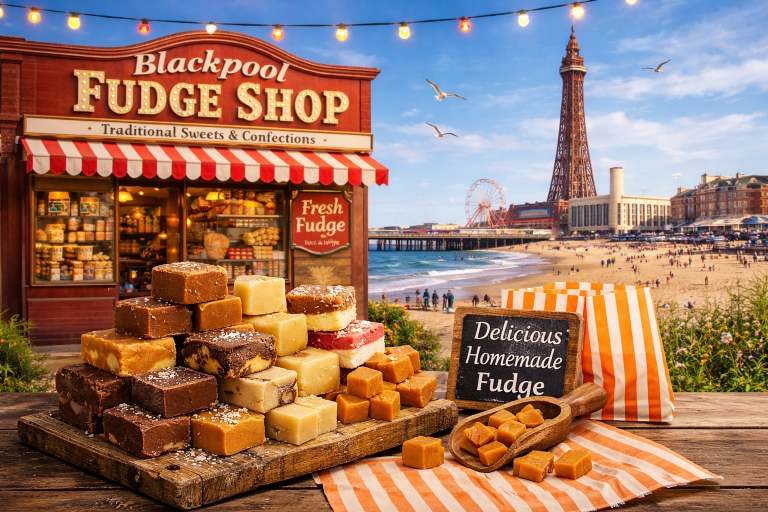
Inside the Blackpool Fudge Shop: A Sweet Slice of British Coastal History
The phrase "Blackpool Fudge Shop" conjures images of sticky fingers, salty air and the joyful chaos of the British seaside. But beyond the holiday snapshots lies a surprisingly rich heritage of craft, chemistry and coastal culture. This article traces how fudge became inseparable from Blackpool, how the town’s confectioners keep the tradition alive, and why a single slab of fudge can taste like a whole summer holiday.
From Emigration Error to Seaside Essential
Most food historians agree that "fudge" originated in late-19th-century America when a batch of caramel was accidentally under-stirred. The grainy, melt-in-the-mouth texture was an instant hit, and the recipe crossed the Atlantic with travelling confectioners. Blackpool, already booming as a resort for mill-workers, embraced the sweet because it could be made quickly on the pier with basic copper pans, sugar and condensed milk. By 1900, fudge stalls were as common on the promenade as deckchairs.
Why Blackpool Became Britain’s Fudge Capital
Several factors turned a simple sweet into a seaside icon. Constant footfall from Lancashire factory towns meant makers could sell batches fresh every hour, eliminating the need for expensive preservatives. Local dairy farms supplied rich milk and butter, giving Lancashire fudge its deeper cream colour. Finally, the cool Irish Sea breeze helped rapid setting, letting tourists watch molten sugar turn into solid slabs in minutes. Word spread: if you wanted the creamiest fudge, you headed to Blackpool.
The Science of the Perfect Crumb
True Blackpool fudge is distinguished by a micro-crystalline structure. Master confectioners heat sugar, brown sugar, milk and butter to 118 °C (soft-ball stage), then beat the mixture as it cools. Controlled agitation forms tiny sugar crystals that feel smooth, not gritty. A 5 °C difference either way creates toffee or syrup, so timing is critical. Traditional shops still rely on marble slabs to draw heat away quickly, a method unchanged for over a century.
Heritage Recipes Still Stirred Today
Walk into any longstanding Blackpool Fudge Shop and you will likely see a battered, hand-written notebook taped above the copper kettle. Vanilla clotted-cream remains the benchmark flavour, followed by treacle rum and walnut. Seasonal specials such as Blackpool Rock Crunch or sticky toffee date fudge appear around bank holidays, helping to draw repeat visitors. Most recipes list just six ingredients, proving that simplicity, when executed with skill, wins loyalty.
Behind the Scenes in a Working Kitchen
At 6 a.m., the air smells of burnt sugar and sea salt. Makers weigh 25 kg of sugar into each pan, add local milk brought in at 4 °C for maximum freshness, then ignite jet burners roaring at 1,000 °C. While the mix boils, a worker known as the "puller" smears butter onto a marble table, ready for the pour. Once cooled to 50 °C, the beating begins; rhythmic scraping folds air into the fudge so it sets light and creamy. Within 45 minutes, a new batch is sliced into 150 g bars, wrapped in waxed paper and placed on the front counter still warm.
Modern Twists Without Losing Tradition
Contemporary Blackpool confectioners balance nostalgia with novelty. Vegan coconut fudge sweetened with agave sits alongside classic clotted-cream slabs, while whisky sea-salt varieties appeal to adult palates. Gluten-free and reduced-sugar options broaden the market without replacing originals. Packaging now features compostable wrappers and QR codes that link to videos of the beating process, letting customers share the craft on social media.
Fudge as Edible Souvenir
Psychologists call it "food-evoked nostalgia": flavours linked to childhood holidays trigger powerful memories. A box of Blackpool fudge bought on the pier, tucked into a suitcase and opened weeks later at home, recreates the seaside in a single bite. Many shops report online spikes every February half-term as parents relive their own childhoods and post parcels to university students craving a taste of home.
Planning Your Own Fudge Pilgrimage
The best time to visit is weekday morning when the day’s first batch is cooling; ask politely and most makers will offer a hot sliver straight from the slab. Look for a shop where pans are visible behind the counter; this signals on-site production. Buy bars still warm if possible, then carry them flat so the fudge keeps its shape. Finally, order extra for freezing; fudge keeps for three months wrapped tightly, letting you stretch the holiday feeling well into winter evenings.
Whether you are a lifelong fan or a first-time visitor, stepping into a Blackpool Fudge Shop is like tasting the British seaside itself. Explore our traditional fudge collection online or pop by our store for the freshest slabs straight from the copper pan. One bite and you will understand why this simple sweet has charmed holidaymakers for over 120 years.
Comments (0)
Comments are moderated. Your comment will appear after approval.
Log in to leave a comment.